

NSE6_FNC_AD-7.6









- DESCRIPTION
- VIDEO
- FEEDBACKS
- RELATED NEWS
NSE6_FNC_AD-7.6 Exam Overview
The Fortinet NSE 6 – FortiNAC-F 7.6 Administrator exam tests the applied knowledge required to configure, operate, monitor, and troubleshoot FortiNAC in a network security environment.
Questions may present operational scenarios, configuration extracts, monitoring information, and troubleshooting captures. Candidates must understand not only individual FortiNAC features but also how those features work together in a deployed environment.
The exam also covers FortiNAC high availability and FortiNAC Manager. It is intended for network and security professionals responsible for the day-to-day administration of FortiNAC infrastructure.
Page Contents
1. NSE6_FNC_AD-7.6 Exam Quick View
4. Exam Objectives and Priorities
7. Results and Score Reporting
8. CertQueen Preparation Materials
NSE6_FNC_AD-7.6 Exam Quick View
| Exam name | Fortinet NSE 6 – FortiNAC-F 7.6 Administrator |
| Exam code | NSE6_FNC_AD-7.6 |
| Time allowed | 60–70 minutes |
| Number of questions | 30–35 |
| Scoring | Pass or fail |
| Score report | Available through the candidate’s Pearson VUE account |
| Language | English |
| Product versions | FortiNAC-F 7.6 and FortiOS 7.6 |
| Exam focus | FortiNAC configuration, operation, monitoring, integration, and troubleshooting |
The exact appointment length and number of questions may vary within the published ranges. Candidates should manage their time carefully when working through configuration and troubleshooting scenarios.
Who Should Take the NSE6_FNC_AD-7.6 Exam?
This exam is aimed at professionals who configure and administer FortiNAC as part of a network security infrastructure.
- FortiNAC administrators
- Network security administrators
- Network access control engineers
- Fortinet implementation engineers
- Security operations engineers
- Network infrastructure consultants
- Engineers supporting endpoint visibility and access control
Candidates should be comfortable reading configuration information, identifying endpoint and network behavior, reviewing monitoring data, and selecting an appropriate response to an operational problem.
Experience with FortiGate, network access control, authentication, VLANs, endpoint profiling, and common network services can make the exam scenarios easier to interpret.
Product Versions Covered
| Product | Exam version |
| FortiNAC-F | 7.6 |
| FortiOS | 7.6 |
Candidates using older FortiNAC study materials should check interface locations, terminology, supported integrations, and configuration workflows against the 7.6 documentation.
The exam may also test FortiNAC high availability and centralized administration through FortiNAC Manager.
NSE6_FNC_AD-7.6 Exam Objectives and Priorities
Concepts and Initial Configuration – 10–20%
This domain covers the FortiNAC architecture and the basic settings required before the system can discover, classify, and control network access. It also includes FortiNAC high availability and FortiNAC Manager concepts.
Deployment and Provisioning – 30–40%
This is the largest domain. It covers the practical work involved in bringing FortiNAC into a network, modeling infrastructure, discovering endpoints, applying access policies, registering devices, and provisioning appropriate network access.
Integration – 15–25%
This domain covers the connections between FortiNAC and the surrounding environment. Candidates may need to interpret how FortiNAC exchanges authentication, device, user, or enforcement information with FortiGate and other supported systems.
Network Visibility and Monitoring – 25–35%
This domain covers the information administrators use after deployment, including connected hosts, users, devices, events, alarms, logs, dashboards, and troubleshooting data.
How to Prioritize the Domains
Deployment and Provisioning together with Network Visibility and Monitoring may represent as much as 75% of the exam. These two domains should receive most of your preparation time.
Do not treat Integration as a list of supported products. Focus on what information is exchanged, which system initiates an action, and how a failed integration affects visibility or enforcement.
Common NSE6_FNC_AD-7.6 Exam Traps
1. Confusing visibility with enforcement
Discovering and profiling a device does not automatically mean that access control has been applied. Read the scenario carefully to determine whether the question concerns identification, policy evaluation, or enforcement.
2. Choosing a configuration change before checking the evidence
When a scenario includes logs, alarms, or monitoring captures, use that information first. A configuration change made without identifying the cause may create a second problem.
3. Treating every unknown endpoint as malicious
An unknown device may simply be unregistered or insufficiently profiled. The correct response depends on the policy, the device state, and the available evidence.
4. Overlooking the underlying network device
Access-control problems may come from FortiNAC, but they may also result from switch, wireless, RADIUS, VLAN, or FortiGate configuration. Identify which component owns the failed action.
5. Ignoring high availability and FortiNAC Manager
The exam description explicitly includes these areas. Candidates who prepare only for single-appliance administration may miss questions about failover, centralized management, or communication between systems.
6. Memorizing menus without understanding the workflow
Interface knowledge helps, but scenario questions usually test the result of a setting. Understand the path from discovery and profiling to policy evaluation, access assignment, monitoring, and remediation.
Free NSE6_FNC_AD-7.6 Sample Questions
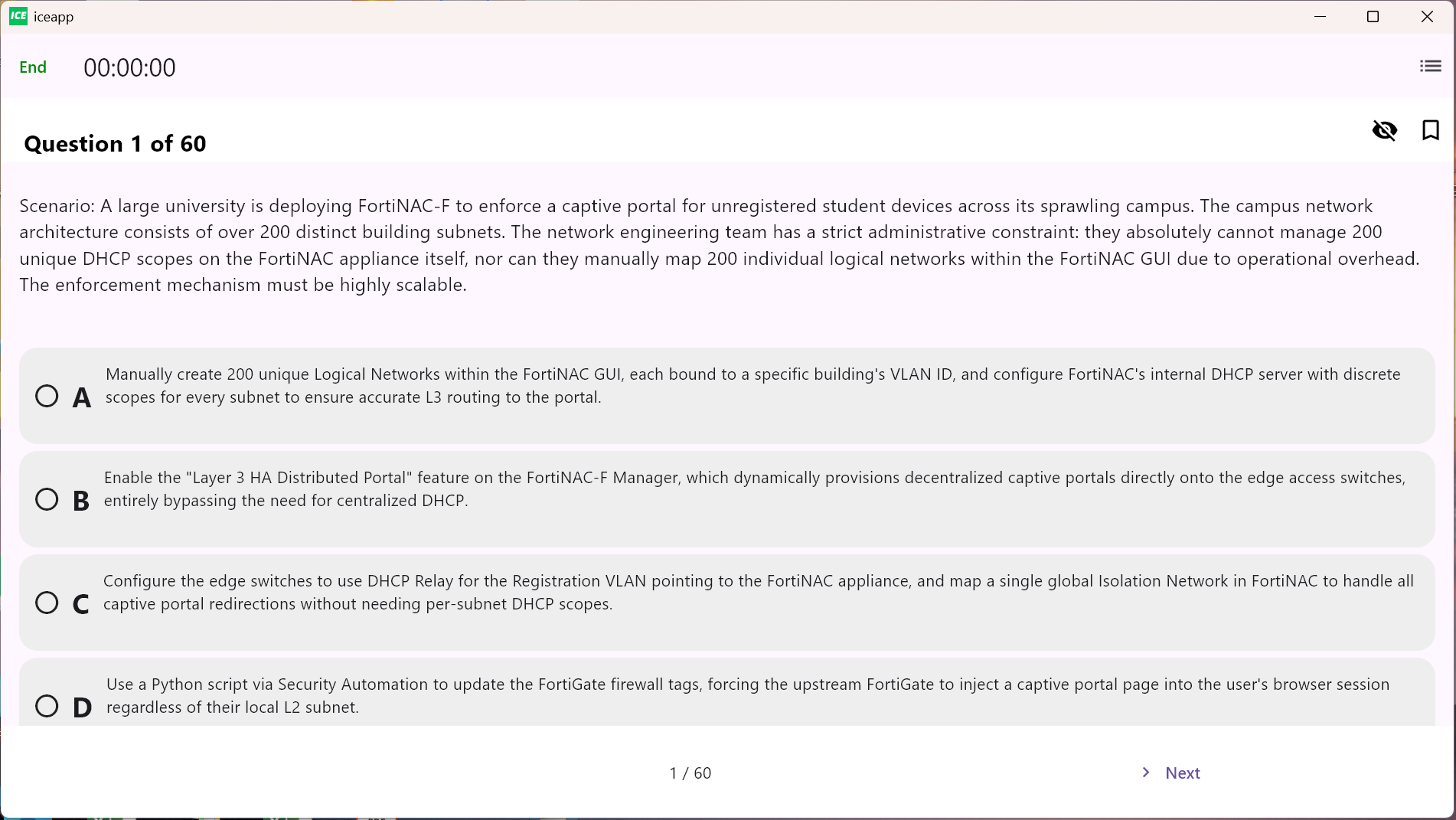
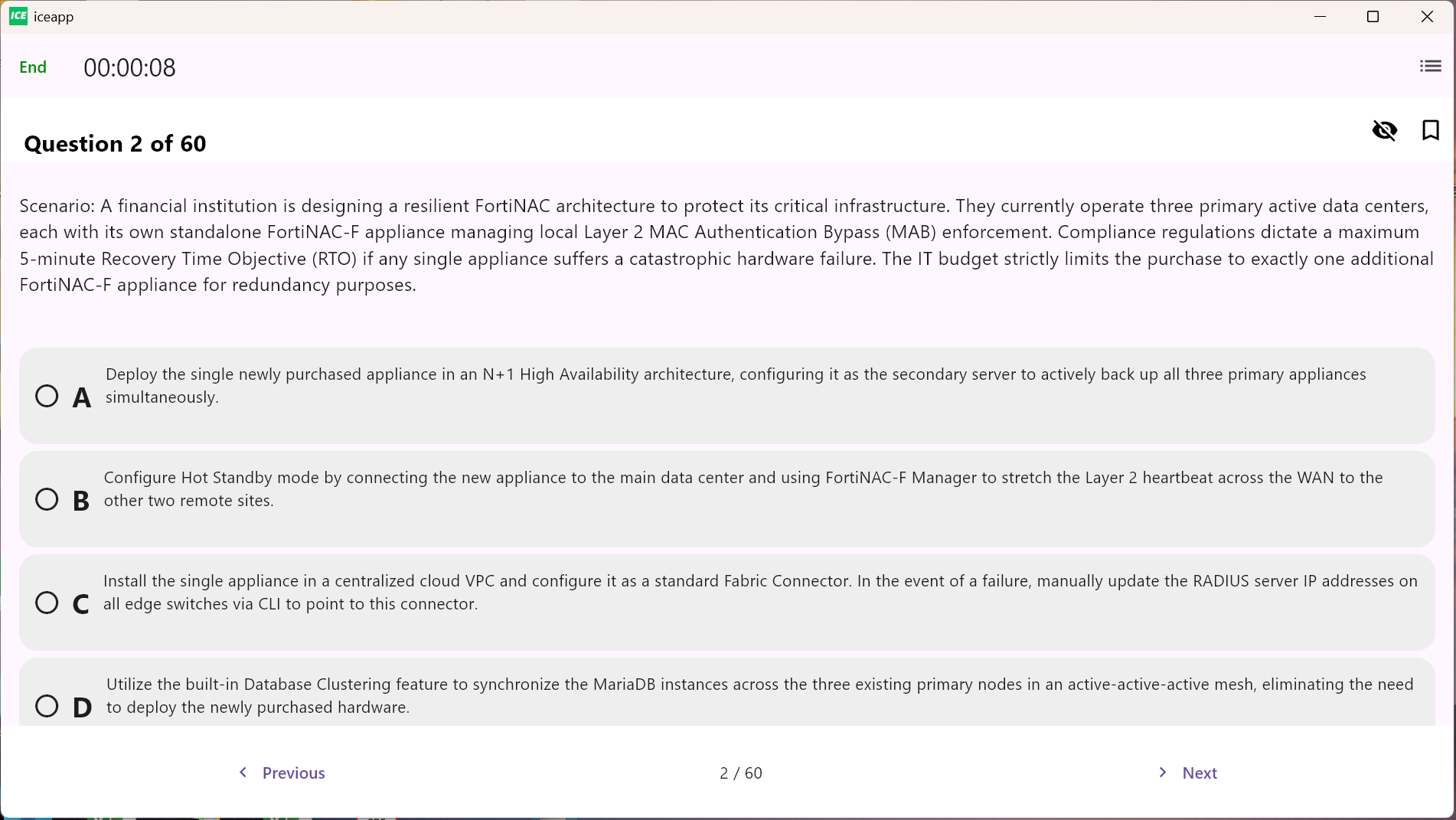
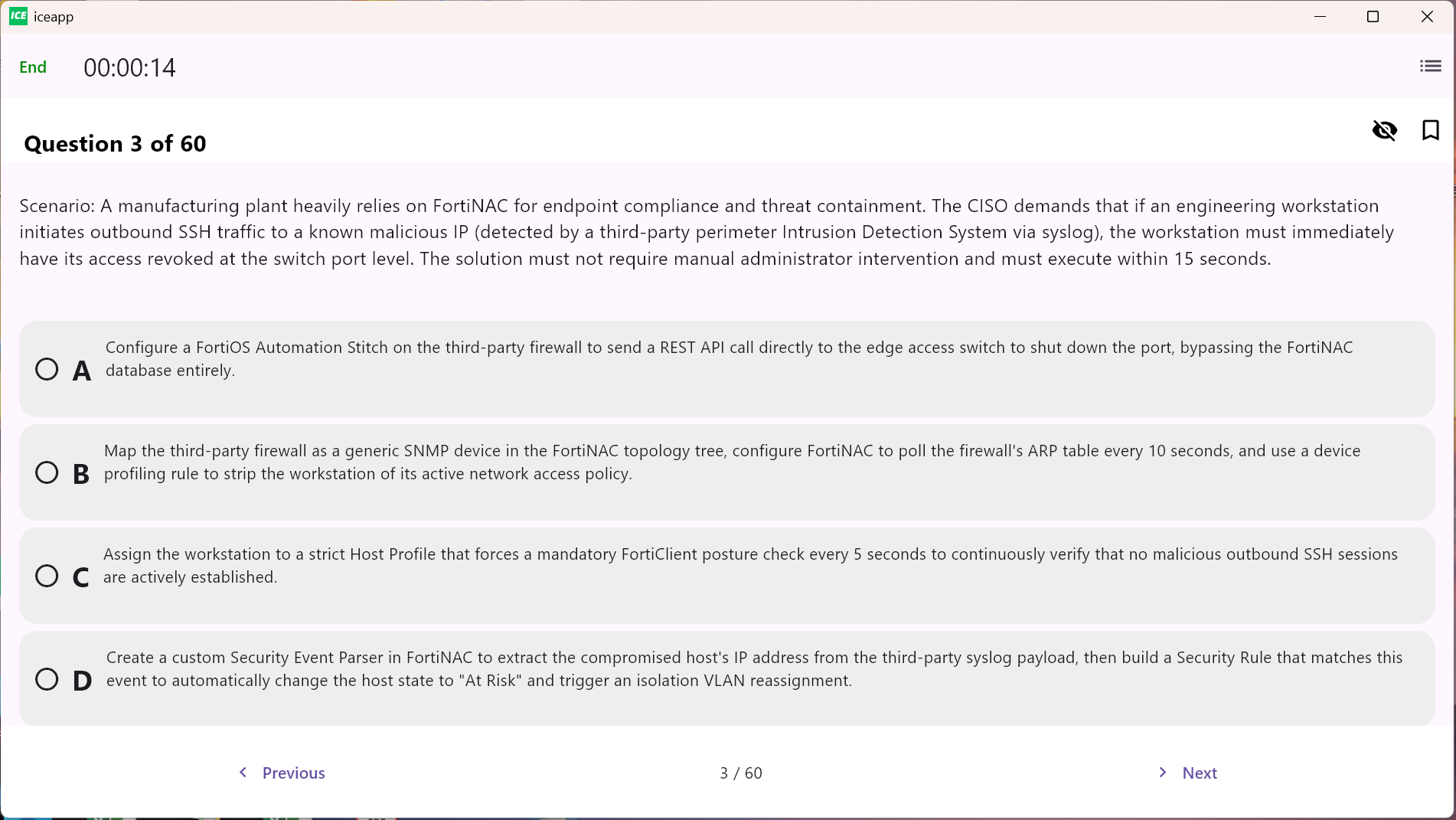
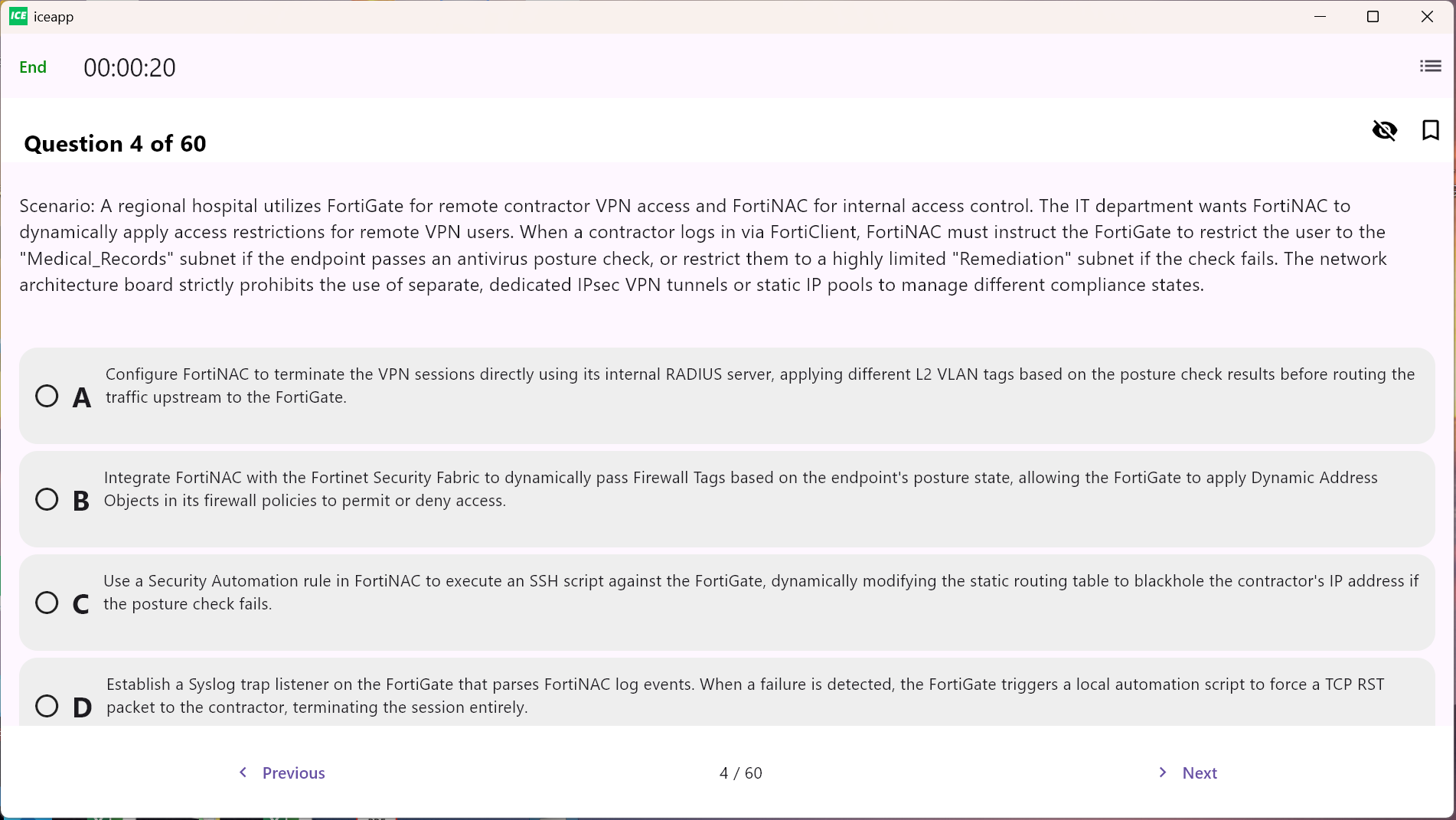
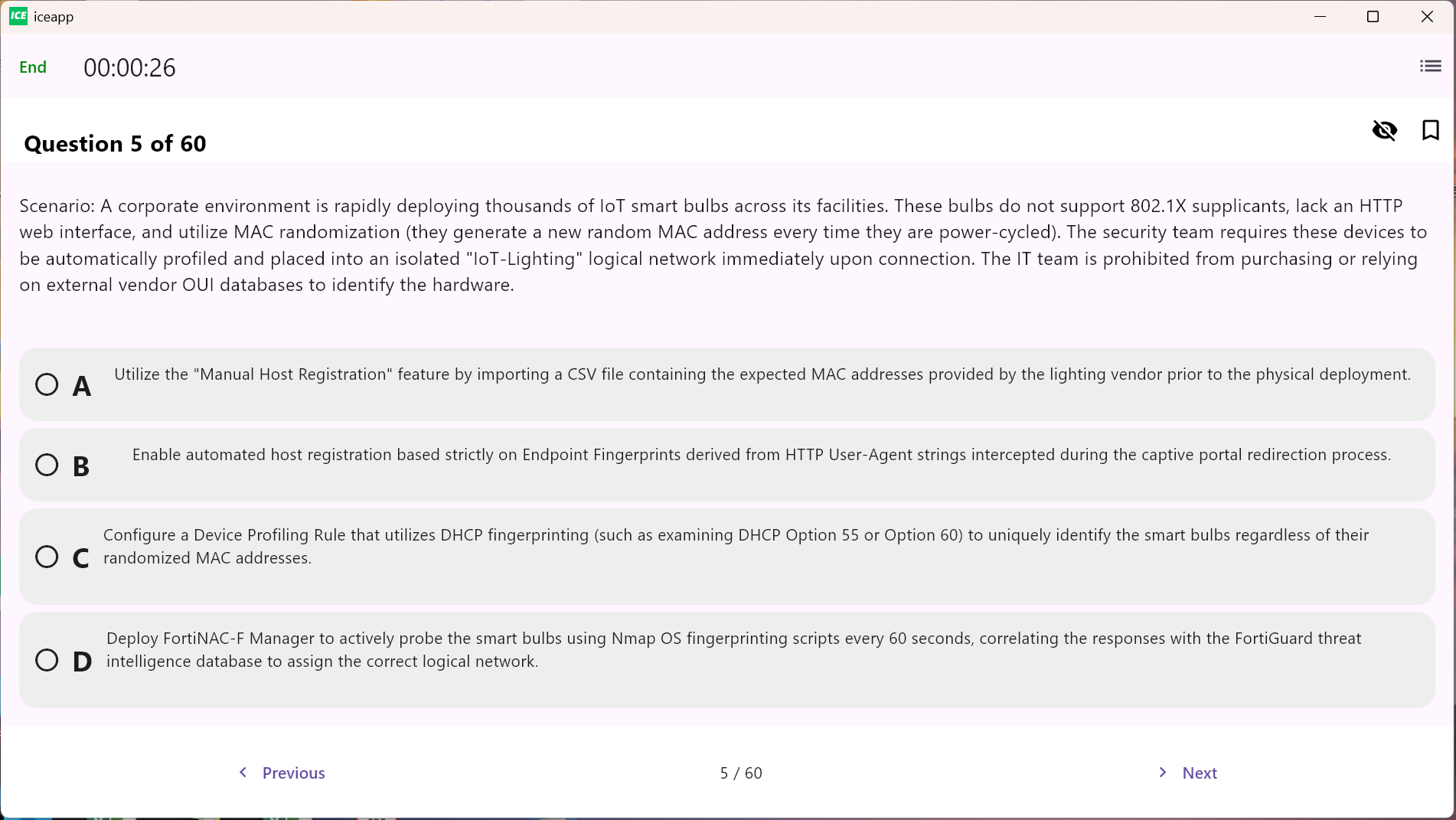
Replace the temporary paths with authentic CertQueen sample-question images before publication. Remove or conceal account details, customer information, order numbers, and other personal data from screenshots.
Results and Score Reporting
The NSE6_FNC_AD-7.6 exam is reported as pass or fail. Fortinet does not publish a numeric passing score in the supplied exam description.
A score report is available from the candidate’s Pearson VUE account. Candidates should use the report to identify weak areas if another attempt is required.
Exam appointments, identification requirements, rescheduling, and retake rules are governed by the current Fortinet and Pearson VUE policies.
CertQueen NSE6_FNC_AD-7.6 Preparation Materials
CertQueen NSE6_FNC_AD-7.6 materials are organized around the four published domains and focus on the configuration and operational judgment required in FortiNAC scenarios.
What Is Included?
- Coverage of all four exam domains
- FortiNAC deployment and provisioning scenarios
- Endpoint discovery, profiling, and access-control questions
- FortiGate and third-party integration practice
- Network visibility, event, alarm, and troubleshooting scenarios
- High availability and FortiNAC Manager coverage
- Answers with concise explanations
- 12 months of free content updates, with an optional upgrade to 24 months for $10
Practice questions are most useful when combined with hands-on FortiNAC-F 7.6 administration. Candidates should be able to connect a configuration choice with its effect on discovery, profiling, access, enforcement, and monitoring.
Start Your NSE6_FNC_AD-7.6 Exam Preparation
Disclaimer
CertQueen is an independent preparation provider and is not affiliated with or endorsed by Fortinet.
Sample materials are independently prepared and are not copied from the live examination. Exam information and product features may change.